
The Turner Prize & the Case for Curiosity

This year's Turner Prize has been awarded to Glasgow-born, London-based Nnena Kalu. The following day during a radio discussion one of the interviewees dismissed Kalu's skill and artworks. I was rather prickled by this response and how casually Kali's achievement and art was flattened.

Of course, I accept that not everyone will like everything, that’s simply human nature. I don’t like liver, The Traitors, or Krispy Kreme doughnuts. And shock horror, I’m not especially fond of Rembrandt, Gainsborough or Canaletto, though I know people who adore them. Taste is personal. But ignorance is something else entirely.
And, in fairness to “your man on the radio”, that reaction might well have been mine too only five years ago. My tutor reminds me of the contorted look on my face back then, as I wrestled with the concept of modernism.

My conversion came slowly, through learning to look beyond the surface, to understand the story behind the work, and behind the artist.
Context, as it turns out, changes everything.
Take this weekend, for example. Escaping the Christmas melee, I wandered into RWA's 172 Open Exhibition.
I explored some real beauties, fascinating surfaces and intriguing materials, until I reached the invited artist, Maria Lalic.
My initial response was a flicker of irritation, if I'm completely honest. The work felt stark, straight forward, even disappointing. Was this about shock value? Is that what got Lalic invited as guest exhibitor?

'Volcano Grey Landscape Painting. 2025'
(Vesuvius Erupting at Night. Volaire. 1770's)
120 x 73.7 oil paint on canvas

'Sevres Blue Landscape Painting. 2004'.
(Le Chemin de Sevres. Corot. c1855-65)
34 x 49 oil paint on canvas

'Naples Yellow Red Landscape Painting. 2024'
(View from the Window at Quisisana. Dahl. 1820)
42.8 x 58.6 oil paint on canvas
There was clearly something going on I didn't understand.
Then I read the wall text.

Suddenly, the paintings shifted, as I understood more of the artist's intention. Lalic isn’t depicting landscape in the way we expect. The land itself is incorporated into the paint, it isn’t a rendering of place, but a work materially made of it.
The pieces extend further still, reaching back into conversations with historical painting and artists. (There’s a new rabbit hole to explore right there!)
Knowing more of the artist's intention added understanding and intrigue, opening up her thinking and process to me, the viewer.
This is what art does for me. It widens my thinking, slows me down, sharpens my focus. And inspires my own work, giving me outlets I may never have found otherwise.
So to the man on the radio, I’d say, don’t be so quick to judge. We may not instantly enjoy or admire a work of art, but curiosity is a gift. And if we allow ourselves to use it, the rewards can be extraordinary.
I'd highly recommend the RWA's Open Exhibtion but get there quick, it closes on Dec 28th. Here are some more of my favourite pieces.

Hannah Davies
Light Patch, Winter Sunset.
Coloured pencils on linen. 2025

Ilona Skladzien
Grounded in Motion
Watered down pen and thread on paper napkin. 2025

Josie Phillips
Garden of Slugs
Ceramics. 2024

Ian Middleton
Odyssey
Oak and patinated bronze. 2024

Kate McDonnell
Spendthrift: One Kilometre Drawing
Ballpoint pen, till receipt paper. 2020

Fiona Robinson PRWA HRSA
Journey into Silence (Steve Reich-Different Trains)
Graphite charcoal and coloured pencil. 2024

Carla Groppi
Homage Smith and Thomas on Under Milk Wood
Soft pastel, charcoal and cotton thread on pages of Under Milk Wood. 2025

Anna Gillespie RWA
Trace
Plaster. 2025
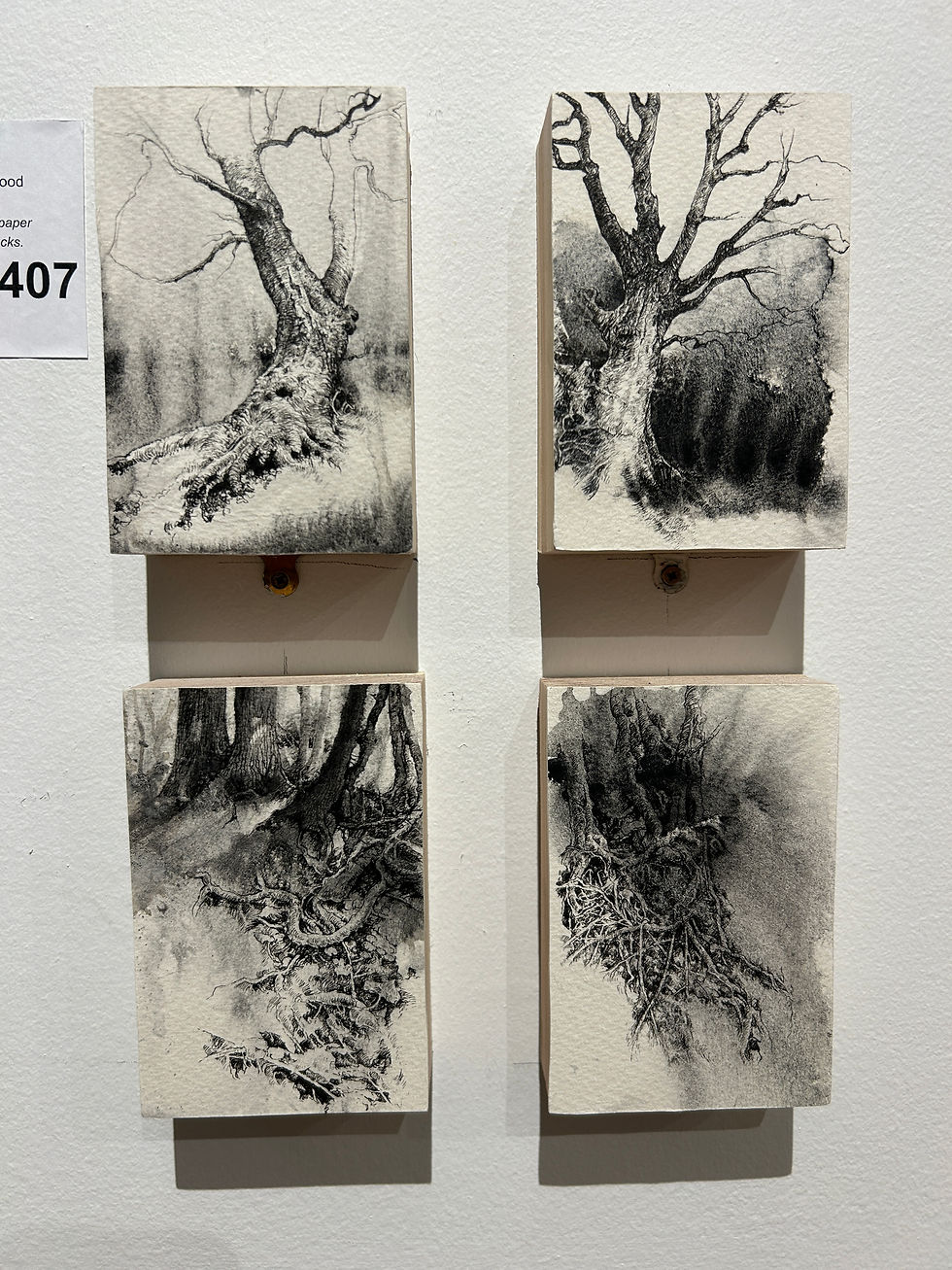
Amie Bolissian
All Four Corners of the Wood
Watercolour, pen and ink on paper mounted on four wooden blocks. 2025


Comments